ServicesDentures
Dentures in Aubrey
If gaps make eating hard or your current denture keeps shifting, we can help. We craft full, partial and implant-retained dentures, then walk you through what each one costs now and what it takes to keep it comfortable in the years ahead.
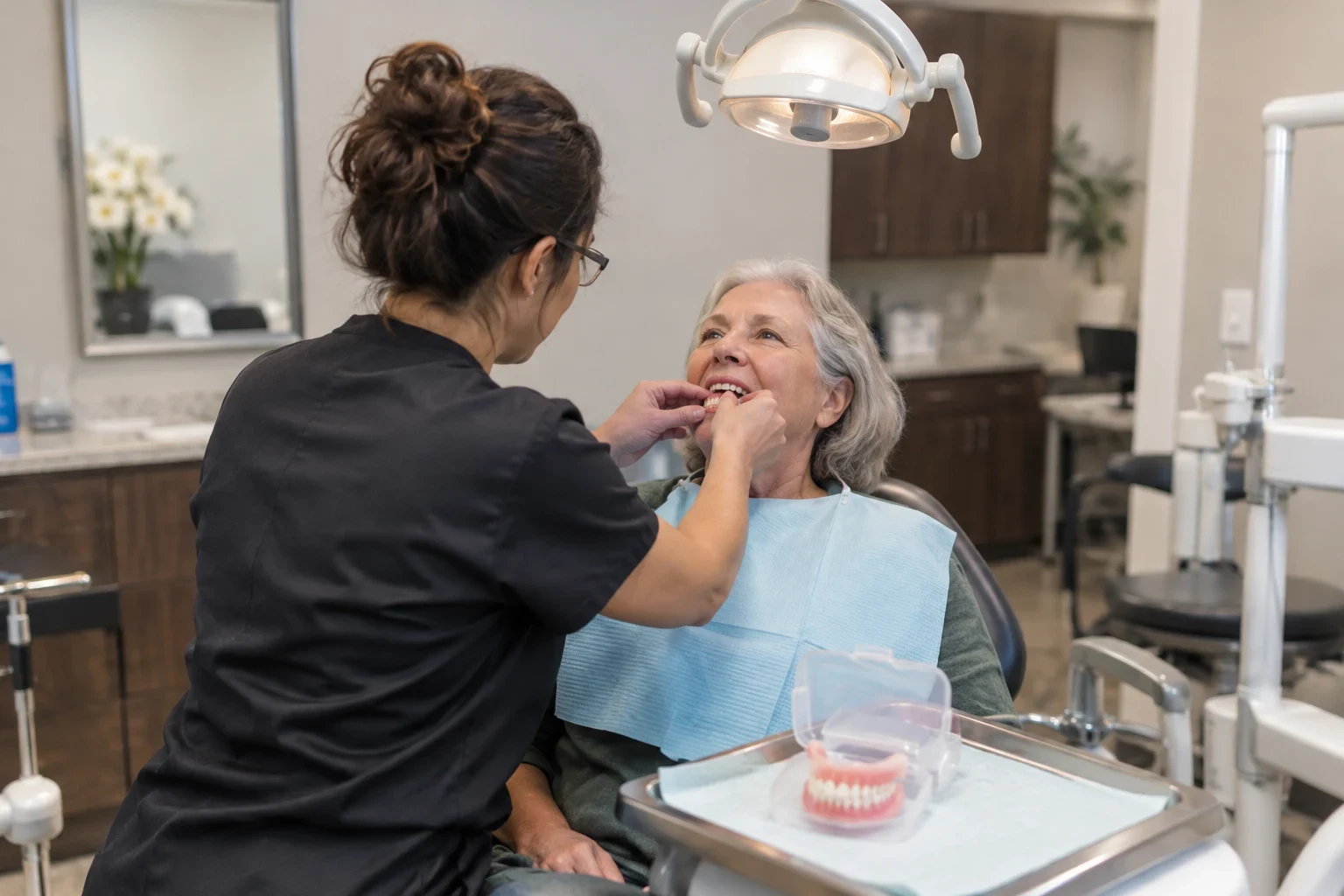
The Right Denture Depends on More Than Price
A denture is a custom set of replacement teeth. Depending on the design, it rests on your gums, clips onto teeth you still have, or attaches to dental implants. It usually makes the most sense when many teeth are missing or failing and giving each one its own implant isn't practical.
A conventional denture is the least expensive place to start. The tradeoff is upkeep. Once tooth roots are gone, the jawbone slowly shrinks, the fit loosens, and over time you will need relines and eventually a new denture. An implant-retained denture costs more up front, stays put while you chew and helps slow bone loss. We lay both choices side by side so you can weigh them fairly.
Our dentist is board-certified, with over 10 years of experience in general and implant dentistry. Because implants are part of that everyday work, we can build a standard denture now in a way that leaves room to add implants later, if that's something you want down the road.
Denture Options We Offer
- Full dentures
- A complete upper or lower set for patients who have lost all their teeth on that arch. The base is shaped to your gums and the teeth are matched to your face and bite.
- Partial dentures
- A removable piece that fills gaps while keeping your healthy teeth. It also stops neighboring teeth from drifting into the empty spaces.
- Immediate dentures
- Made ahead of time and placed the same day teeth are removed, so you are not without a smile while you heal. Expect a reline once the gums settle.
- Implant-retained dentures
- Your denture snaps onto a few dental implants. Most patients notice they can bite into firmer foods and stop worrying about slipping.
- Relines and adjustments
- We smooth sore spots and refit the base as your mouth changes, which keeps an older denture comfortable longer.
Signs a Denture May Be Right for You
Several teeth are missing
Gaps make chewing harder and put extra wear on the teeth you have left.
Teeth are loose or failing
When many teeth are badly decayed or loose from gum disease, replacing them together is often simpler than saving each one.
Your current denture slips
Clicking, rocking or needing more adhesive every year usually means the bone underneath has changed. A reline or an implant option can fix that.
Sore spots that keep coming back
A denture that rubs is not something to put up with. It usually needs an adjustment or a new base.
You avoid certain foods
If you cut everything into tiny pieces or skip raw vegetables, a better-fitting denture can open your menu back up.
How We Make Your Denture
- 1
Focused evaluation
Everything begins with our $25 focused evaluation. You get a thorough exam and digital X-rays, plus a CBCT scan when we need a 3D look at your bone, followed by a treatment planning conversation. Together we decide which teeth can stay, which should come out, and how each denture choice compares on cost and upkeep.
- 2
Impressions and jaw measurements
We make detailed impressions of your gums and any remaining teeth, then note exactly how your upper and lower jaws meet when you close. You help pick the tooth shade and shape so the finished smile looks like it belongs to you.
- 3
Try-in
Before anything is final, you wear a wax model of your denture. This is your chance to change the look, the bite or how your lips rest.
- 4
Delivery and follow-up
We seat the finished denture and show you how to put it in, take it out and clean it. Then we see you again over the first few weeks to fine-tune the fit.
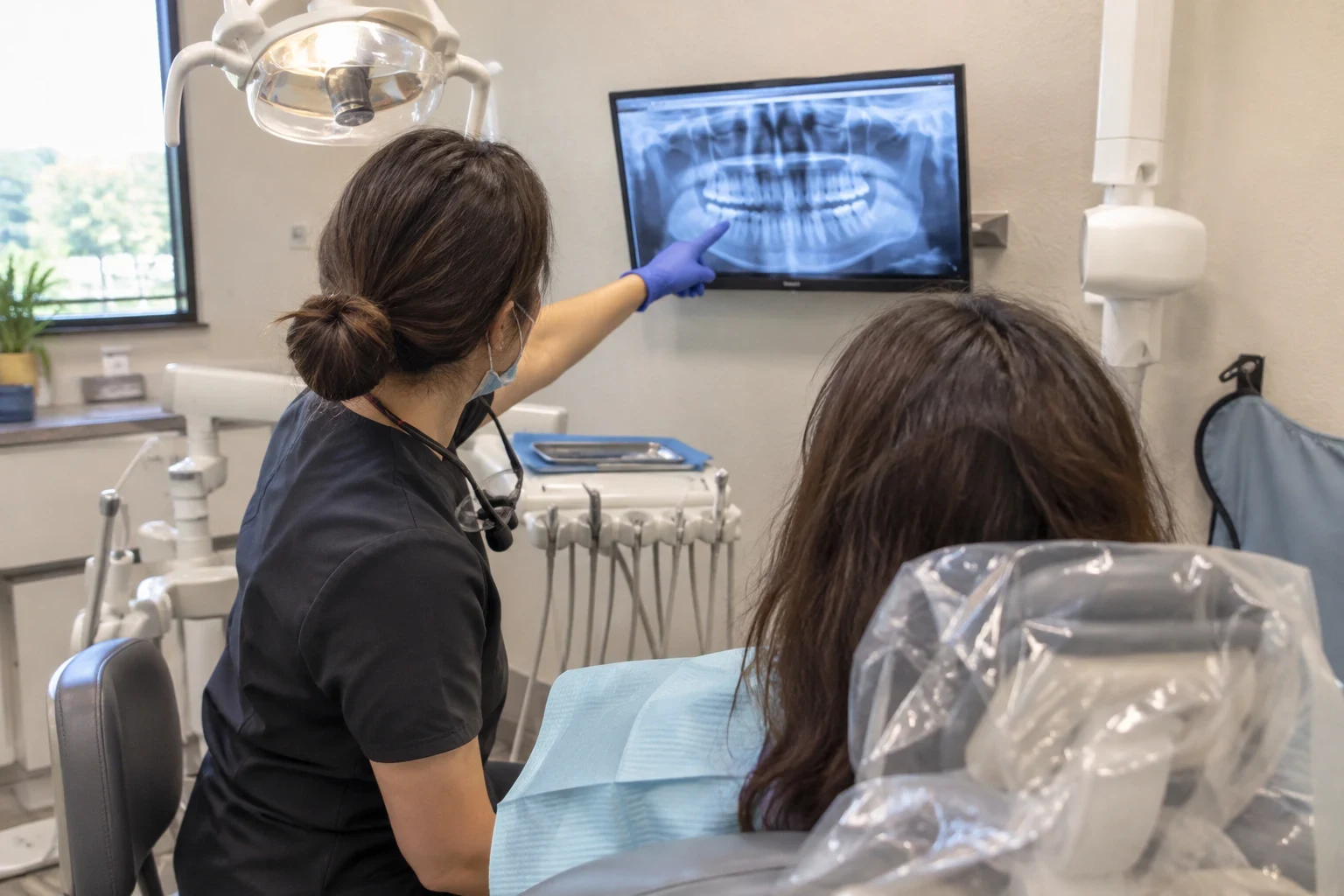
What Affects the Cost of Dentures
Before any work starts, you get a treatment plan that spells out each step and its cost, so the bill holds no surprises. We also talk about what comes after that first bill, since a lower-cost denture today may need more relines and an earlier replacement later. You can spread payments across as long as 24 months with 0% interest financing, and seeing whether you preapprove won't touch your credit score.
- Full arch or a few gaps
- Replacing every tooth on an arch takes more teeth, more material and more chair time than a partial that fills a couple of spaces.
- Base and tooth materials
- Higher-grade acrylics and denture teeth look more lifelike and stand up better to daily chewing, which can push back the day you need a replacement.
- Treatment before the denture
- Extractions, smoothing uneven bone or getting gum disease under control all add steps before a denture can sit properly.
- Implant support
- Adding implants raises the starting cost, but it often means fewer relines and a steadier bite for years afterward.
- Your coverage
- We are in-network with 15+ major PPO dental insurance plans. If you don't have insurance, our in-house Membership Plan is another way to keep costs within reach.
Denture Questions We Hear Often
Something not covered here? (940) 748-1287
How long do dentures last?
A well-made denture usually serves for several years before it needs replacing. The fit tends to change sooner than that, because the jaw slowly shrinks once teeth are gone. Periodic relines keep it snug in between. Dentures that snap onto implants generally stay stable longer since the implants help hold on to bone.
Will people notice I am wearing dentures?
A denture that is made carefully should not draw attention. We choose tooth shade and shape to suit your face, and you approve the look at the try-in before the final piece is made. A secure fit also keeps your speech sounding like you.
Can I leave the office with teeth on the day of my extractions?
Yes. An immediate denture is built from impressions taken before your teeth are removed, and we seat it right after the extractions. As your gums heal they shrink a bit, so we schedule a reline a few months later to restore the fit.
Can I switch to implants later?
In many cases, yes. Plenty of patients begin with a conventional denture and add implants once timing or budget allows. A CBCT scan shows us how much bone you have, so we can tell you honestly whether that option is open to you.
Will dentures feel strange at first?
They usually do for a little while. Your cheeks, tongue and lips need time to learn the new shape, and talking and chewing improve with practice. Within a few weeks most people barely think about it, and a couple of follow-up visits take care of any rubbing spots.
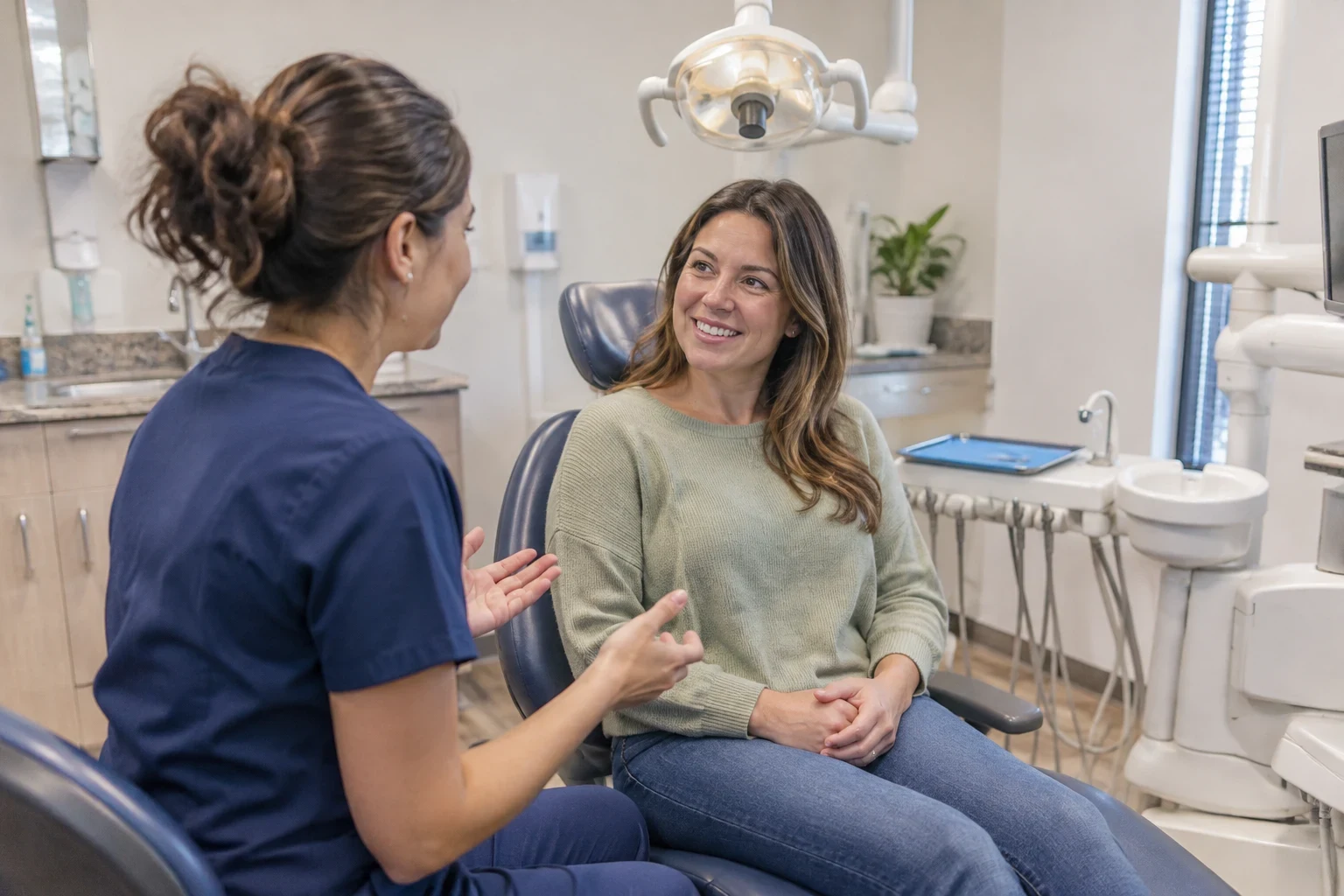
See Which Denture Fits Your Life and Budget
We will look at your mouth, explain each option in plain terms and compare what it costs now with what it takes to maintain. Patients come to us from Aubrey, Little Elm, Pilot Point and nearby towns.