ServicesWisdom Teeth Removal
Wisdom Teeth Removal in Aubrey, TX
We look at how your wisdom teeth sit and tell you whether they need to come out now or can be watched. When removal makes sense, we do it gently. Before anything starts, you get a clear treatment plan, a written cost and simple aftercare.
When Wisdom Teeth Should Come Out
Wisdom teeth are the final molars to show up, most often in the late teens or early twenties. A few arrive straight and never cause trouble. Plenty don't have the space. They lean into the neighboring tooth, stay half covered by gum, or remain buried in the jaw.
The expense of a troublesome wisdom tooth tends to arrive later. When it pushes against your second molar, it can bring decay or bone loss to a tooth you'll want to keep for decades. That can lead to a root canal, an extraction or eventually a dental implant. Removing the wisdom tooth early is usually the smaller, less costly step, and younger patients generally recover faster.
Our board-certified dentist has spent over 10 years in general and implant dentistry. That experience counts when a wisdom tooth rests near a nerve or has already damaged the molar beside it.
What Your Wisdom Teeth Visit Includes
- Imaging that shows the full picture
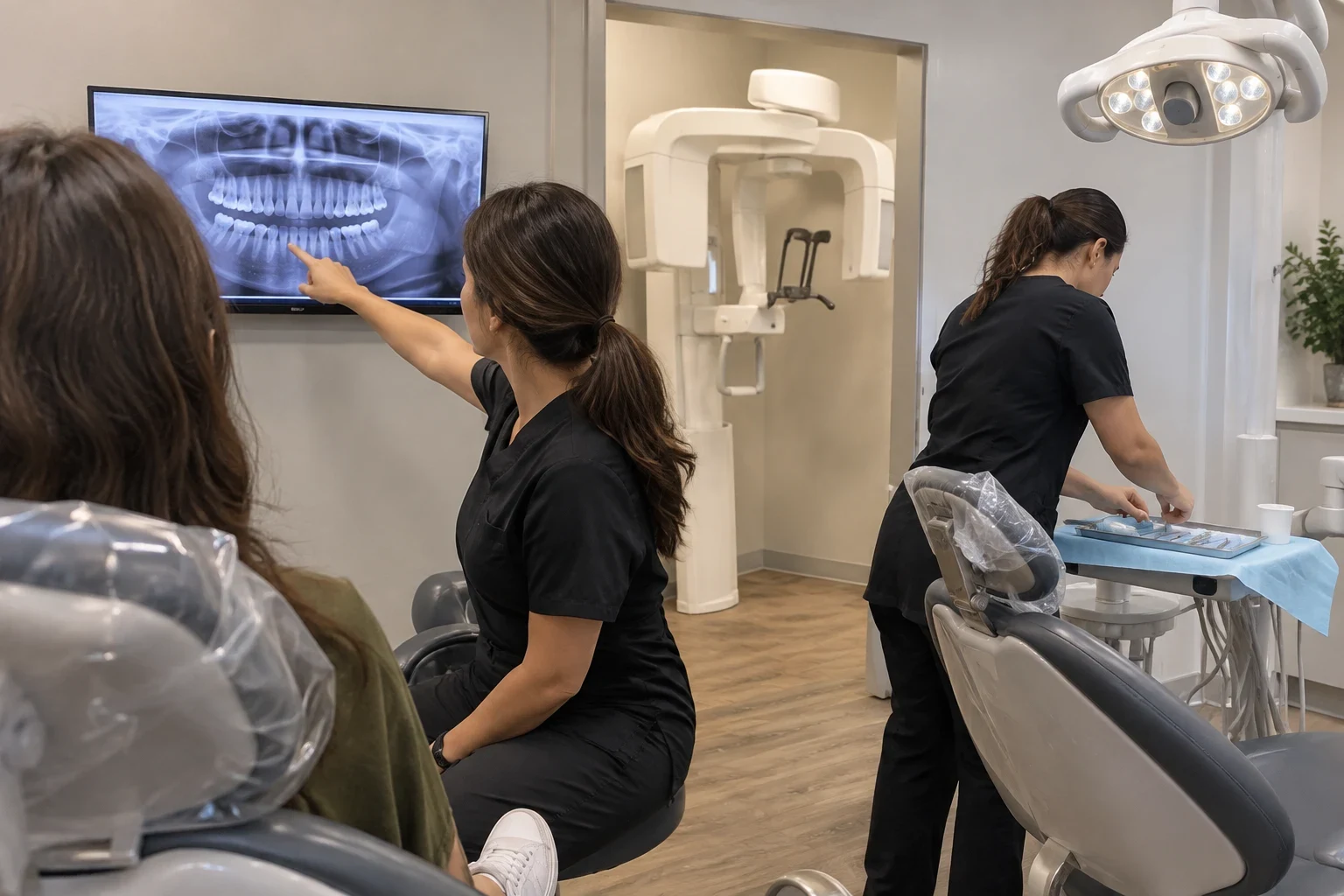
- We begin with digital X-rays. If a tooth is impacted or sits near the nerve in the lower jaw, we add a CBCT scan to see its exact angle and depth, so your plan matches what is actually in your jaw.
- A straight answer on removing or waiting
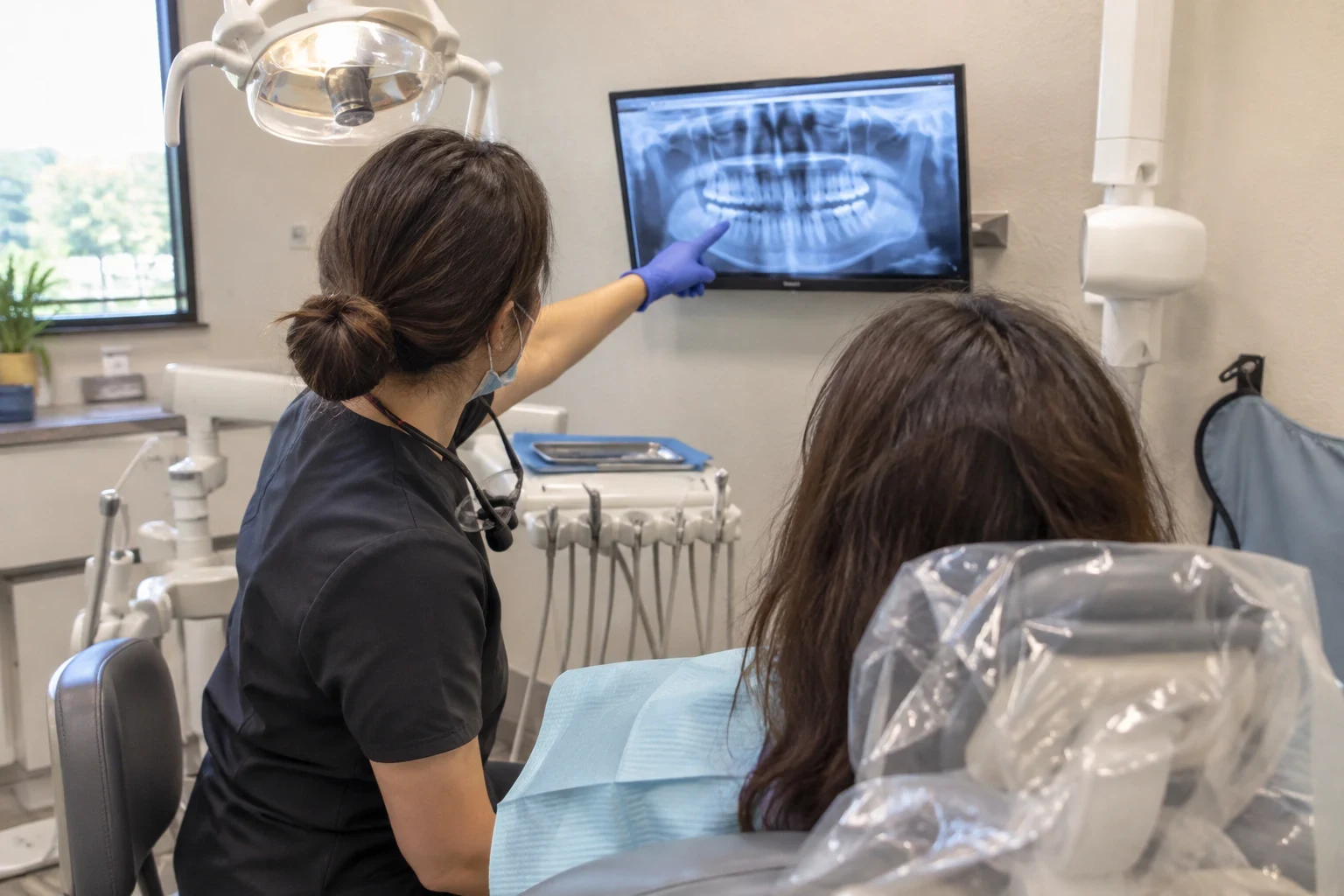
- A wisdom tooth that is healthy, upright and easy to clean may only need monitoring. When one is doing damage or likely will, we point it out on your images and explain why.
- Thorough, gentle numbing
- Nothing starts until the area is completely numb. We check in with you throughout, and raising your hand pauses us at any point during treatment.
- Removal with less disruption
- Fully erupted teeth often come out whole. A trapped tooth may be divided into smaller pieces so we take away less bone, which helps you heal more easily.
- Aftercare in writing, plus a check-in
- You go home with written steps for gauze, swelling, food and gentle cleaning, along with a list of the signs that mean you should give us a ring.
Signs Your Wisdom Teeth Need Attention
Sore, puffy gum at the very back
When a tooth only partly breaks through, the gum covering it can hold food and bacteria underneath. The resulting infection, called pericoronitis, often returns again and again.
A tight or aching jaw
An impacted tooth can press on the back of the jaw, leaving it stiff or sore, most noticeably when you open wide or chew.
Food that keeps getting stuck
A tilted wisdom tooth creates a gap your brush can't reach. Cavities can form there on the wisdom tooth and the molar next to it.
A lingering bad taste or smell
When brushing doesn't clear it, infection around a partly erupted tooth is a common cause.
Teeth feeling crowded or your bite shifting
If your front teeth seem tighter or your teeth meet differently, have the back of your mouth looked at.
What Moves the Price of Wisdom Teeth Removal
No two mouths are priced the same, because the teeth themselves set how much work is involved. After we review your imaging, you see the number in writing before we touch a tooth. If you carry PPO coverage, there's a good chance we're in your network, since we work with 15+ major PPO dental insurance plans. To spread the cost out, you can ask about 0% interest financing for up to 24 months, and checking for preapproval has no credit score impact.
Number of teeth
One tooth is a smaller visit than four. Taking several out together can mean one recovery instead of two, so we'll weigh both paths with you.
Fully in or still trapped
A wisdom tooth that has broken through cleanly is a routine extraction. One held under gum or bone calls for a surgical approach and more chair time.
Roots and nearby nerve
Hooked or curved roots, or a tooth resting near the nerve, take slower and more careful work. Seeing this on the scan beforehand keeps the plan accurate.
Insurance or membership
Many PPO plans pick up part of the bill. If you have no dental insurance, our in-house Membership Plan is an option worth asking about.
How Wisdom Teeth Removal Works
- 1
Exam and imaging
Your first visit includes an exam and digital X-rays, with a CBCT scan added when it's needed. We then walk through the images with you one tooth at a time.
- 2
A written plan and price
You receive a plan listing which teeth we suggest removing and the reason for each, with the cost and your expected insurance coverage. The scheduling choice is yours.
- 3
The day of removal
After numbing the area, we take out the teeth and add stitches if a site needs them. How long you're in the chair depends on the number of teeth and their position, and we'll give you a time estimate when you book.
- 4
Recovery and follow-up
Swelling tends to be greatest on the second or third day, and most patients feel like themselves again within a week. At your follow-up we look at the healing sites and answer anything on your mind.
Wisdom Teeth Removal Questions
Do all wisdom teeth have to come out?
No. A wisdom tooth that stands upright, has fully erupted and stays easy to brush and floss can often stay. We recommend removal only for teeth that are causing harm or clearly headed that way, and we show you the reason on your images.
Will it hurt?
We numb the area completely first, so what you notice is pushing and pressure rather than sharp pain. Once the numbness fades, the pain relief we recommend keeps most patients comfortable. Soreness tends to ease a lot after day three.
How long until I can eat normally?
For the first couple of days, choose soft, cool foods and avoid straws so the clot that protects the socket stays put. Most patients are eating their regular meals within about a week, favoring the other side at first.
Is it better to wait until they hurt?
Usually not. Pain often means a wisdom tooth has already started decay or bone loss on the molar beside it, and repairing that molar is the expensive part. Removing the tooth on a planned date is generally simpler than dealing with an infection later.
Can my teenager be seen too?
Yes. We care for adults and families, and the late teen years are a smart time to see how wisdom teeth are forming. Teeth with roots that haven't fully developed are often easier to remove.

Get a Clear Answer on Your Wisdom Teeth
For $25, our focused evaluation gives you a comprehensive exam and digital X-rays, plus a CBCT scan if your teeth need a closer look. We finish with treatment planning and a consultation, so you know your options and their cost before you pick a date.