ServicesRoot Canals
Root Canals in Aubrey, TX
A throbbing tooth does not always have to come out. We remove the infected nerve, seal the canals and rebuild the tooth so you keep chewing on your own root. You will know your options and what each one costs before we start.
When a root canal is the right call
The center of each tooth holds soft tissue called the pulp, where the nerves and blood vessels live. Bacteria can get in through deep decay, a fracture or the worn edges of an aging filling. Once the pulp is inflamed or infected, it cannot recover by itself, and the pain or swelling tends to return even after a quiet stretch.
A root canal takes out that tissue, cleans the canals and seals them. The outer tooth stays where it is, so your bite, your jawbone and the neighboring teeth keep working as they did. Many patients get decades from a treated tooth topped with a good crown.
We weigh value over time, not only today's bill. An extraction is cheaper at first, but the gap usually calls for an implant or bridge down the road to keep nearby teeth from drifting. When a tooth can be saved, keeping it is often the better long-term investment. When it cannot, we will say so plainly and walk you through extractions and dental implants instead.
What your root canal treatment includes
- Digital X-rays and a 3D scan if needed
- We map how many canals the tooth has, how they are shaped and whether infection has reached the root tip. A molar may have three or four canals, some curved, and a CBCT scan helps us locate every one.
- Numbing that is checked before we begin
- We confirm the tooth is completely numb before any work starts. If you feel something, let us know and we stop.
- Cleaning and shaping the canals
- Fine instruments remove the infected pulp, and a disinfecting rinse flushes each canal. Tissue left behind is a frequent cause of failed root canals, so we do not rush this step.
- Sealing and a temporary filling
- Once clean, each canal is packed with gutta-percha, a flexible rubbery material, then sealed so bacteria cannot get back in. A temporary filling covers the tooth until the final restoration is ready.
- A crown plan for back teeth
- After treatment a molar grows more brittle and can split under the force of chewing. We plan a crown so the tooth holds up, and we share that cost at the outset.
When a tooth is telling you the nerve is in trouble
An ache that stays after a hot or cold drink
A quick zing that fades in a second or two is common. If the pain keeps going well after your coffee or iced tea is gone, the nerve inside is often irritated.
Throbbing that wakes you up
Pain that pulses on its own, especially at night or when you lie down, often points to an inflamed pulp.
Swelling or a pimple on the gum
A small draining bump beside one tooth usually signals infection at the root. It may not hurt much, yet it still needs treatment.
A tooth turning gray or dark
A tooth that darkens after a knock or injury may have a nerve that has died.
Pain when you bite down
Soreness when chewing on one spot can come from infection at the root tip or a crack that has reached the pulp.
How your visit goes
- 1
Evaluation and a clear plan
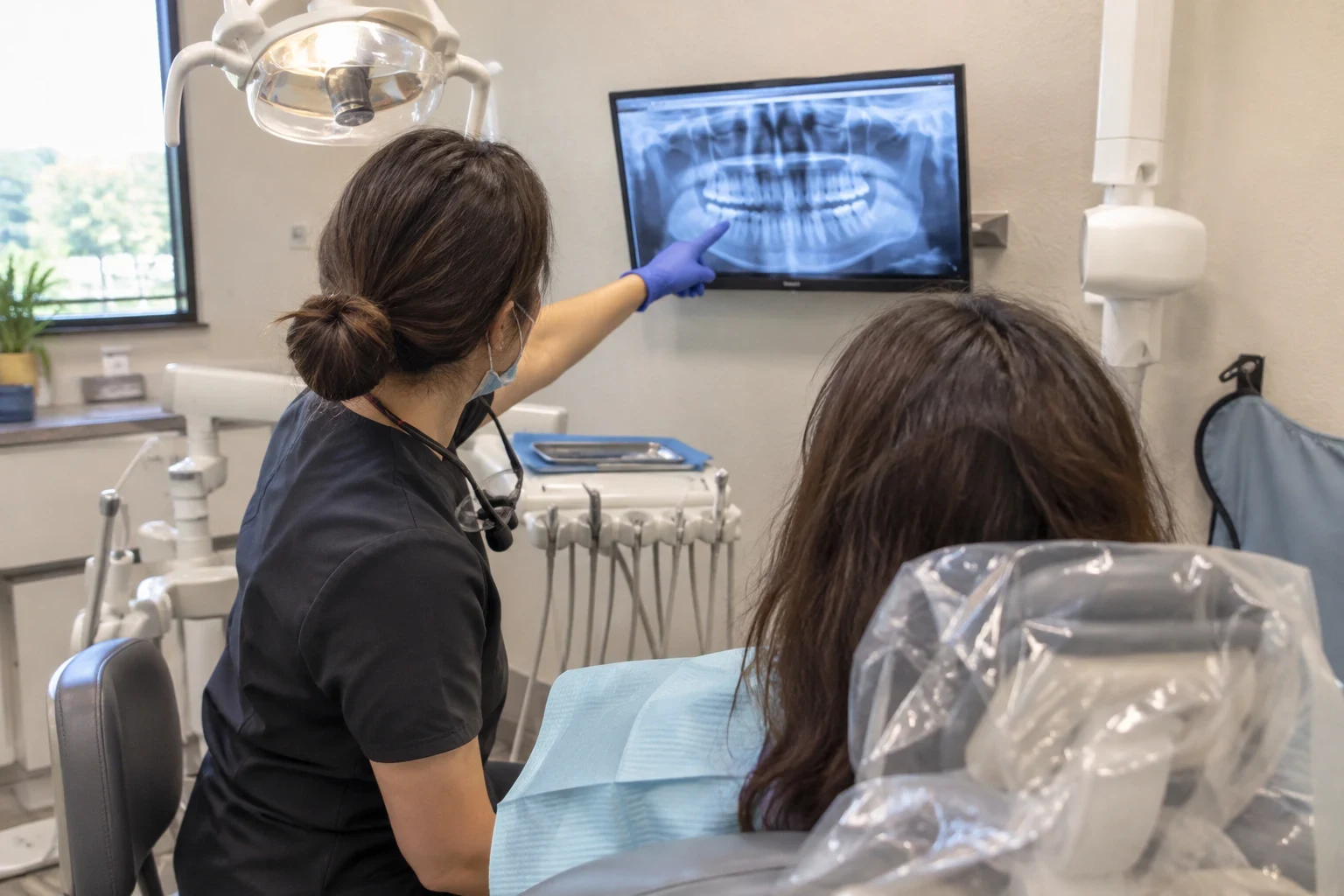
For $25, the focused evaluation includes a full exam, digital X-rays, a CBCT scan when a closer look is needed, plus treatment planning and a consultation. We go over the images with you and explain whether the tooth can be saved.
- 2
Numbing and isolating the tooth
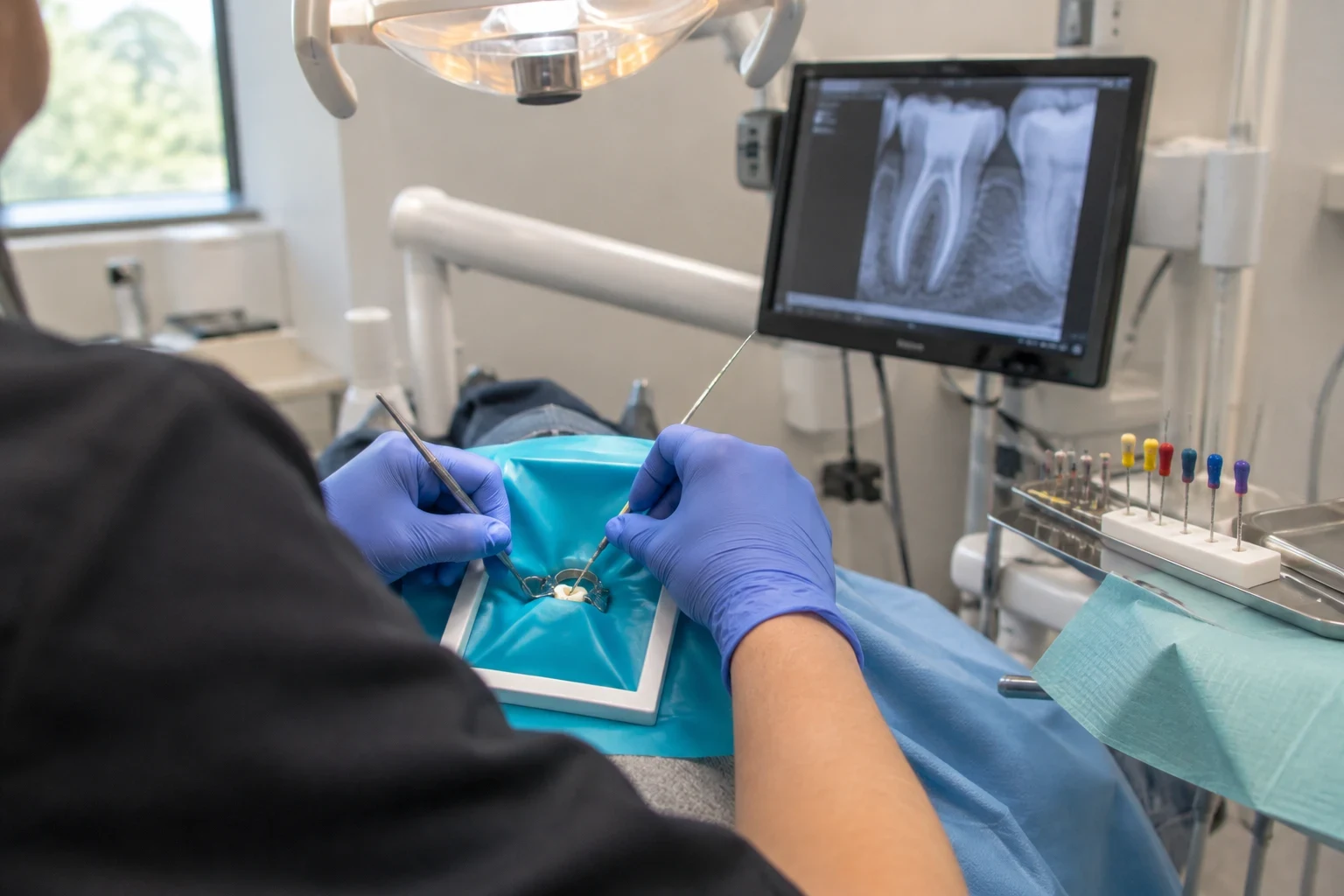
Once you are numb, we place a thin barrier called a dental dam so saliva stays away from the treated tooth. You can breathe and swallow the way you normally would.
- 3
Treating the canals
We clean, shape and seal the canals, then cap the tooth with a temporary filling. Most root canals are done in one visit, though an infected molar may take two.
- 4
Crown and follow-up
After a few weeks, we place your permanent crown. Mild soreness for a few days is normal and usually settles with over-the-counter pain relief.
What affects the cost of a root canal
You get a written estimate before treatment begins, and it already counts the crown, so the total does not creep up later. We are in-network with 15+ major PPO dental insurance plans, and patients without insurance can join our in-house Membership Plan. If you would rather pay over time, we offer 0% interest financing for up to 24 months, and checking for preapproval has no impact on your credit score.
- Which tooth it is
- Front teeth usually have one canal. Molars have several, so the appointment runs longer.
- How complex the canals are
- Canals that curve, narrow or have hardened with age take extra time and care to clean all the way down.
- Retreating an old root canal
- When a tooth was treated years ago, the old filling material has to be removed before the canals can be cleaned again, which adds time.
- The final restoration
- Most back teeth need a crown, while some front teeth do fine with a filling. Because this is part of what the tooth really costs, it goes into your estimate from the start.
Root canal questions patients ask
Something not covered here? (940) 748-1287
Does a root canal hurt?
With the tooth fully numb, the treatment feels a lot like having a filling placed. Most patients say the toothache that brought them in was much worse. Plan on some tenderness for a few days afterward.
Is it better to just pull the tooth?
An extraction is cheaper today, but an empty space often lets nearby teeth shift and the bone shrink, and filling that space with an implant or bridge usually costs more than saving the tooth. If the crack runs below the gum or too little tooth remains, removing it can be the better choice. Either way, we show you the reasons on your X-rays.
How long will a root canal tooth last?
Many treated teeth last for decades when they have a well-fitted crown and steady brushing and flossing. The two biggest threats are leaving a back tooth without its crown and new decay forming at the edges, so keep up with regular checkups.
Who will treat my tooth?
Your dentist is board-certified and has been practicing general and implant dentistry for over 10 years. Knowing both sides helps when weighing whether a tooth is worth saving or would be better replaced.
Will I need time off afterward?
Usually not. Most patients return to their normal routine right after the appointment. The numbness in your lip and cheek can last a few hours, so wait until it wears off before you eat, and chew on the other side until your crown is placed.

Find out if your tooth can be saved
A $25 focused evaluation gets you X-rays, an exam and a straight answer on root canal versus extraction. We will walk you through the cost of each before you decide.