ServicesExtractions
Tooth Extractions in Aubrey
When a tooth is cracked, badly decayed or keeps flaring up, removing it can end the pain. We take it out gently, explain your options for the space it leaves, and help you choose a path that fits your budget now and later.
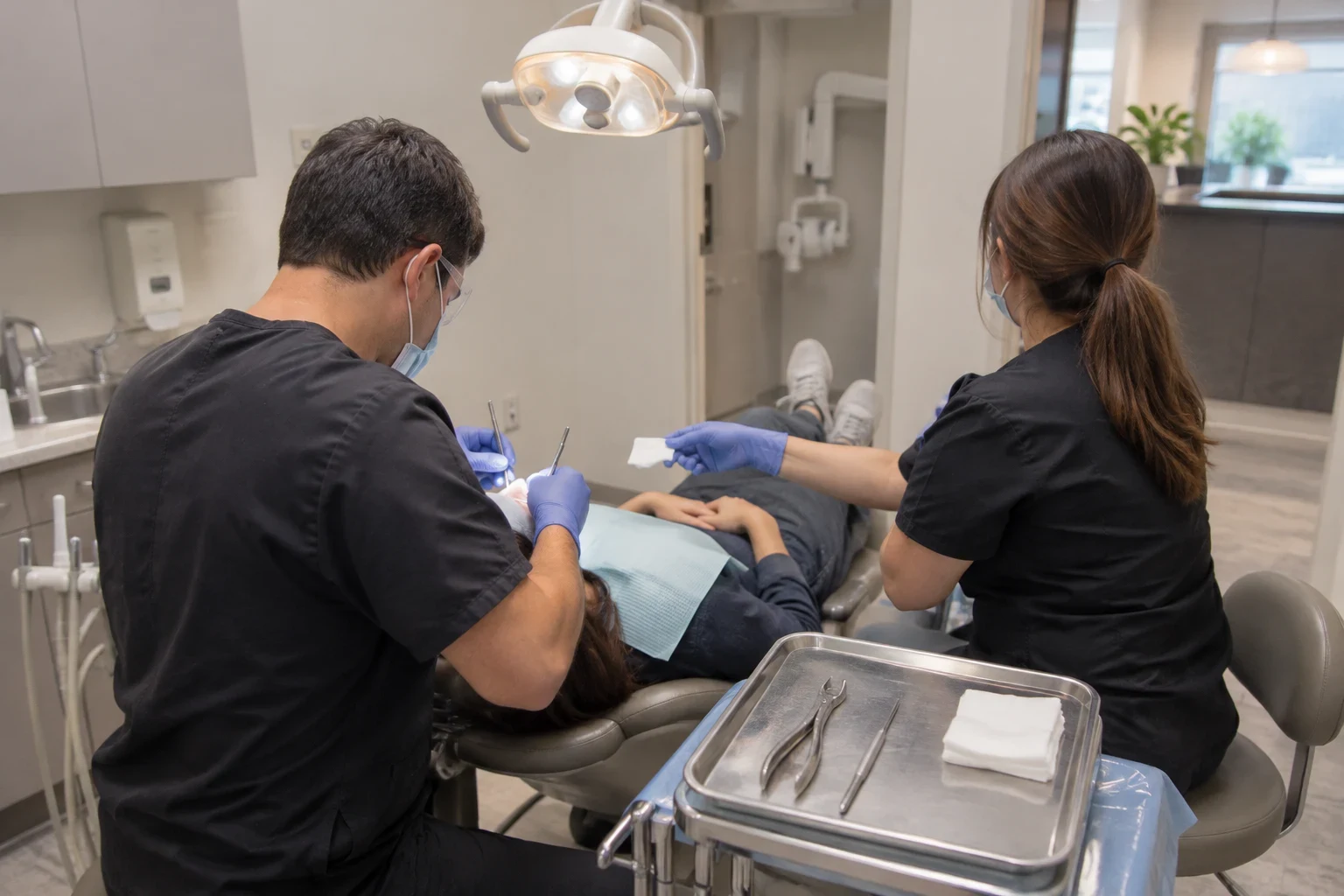
When Taking a Tooth Out Is the Right Call
Saving a tooth is always our first choice. Some teeth, though, are split below the gumline, too worn down to hold a crown, or loosened by advanced gum disease. Holding on to them often means ongoing pain, return visits and money spent on a tooth that will not last. For those teeth, a careful extraction is the better long-term value.
Before we remove anything, we study the full picture with digital X-rays and a CBCT scan when needed. You hear plainly whether a root canal and crown could keep the tooth, what that path would cost over its expected life, and how it compares with removal and replacement.
The dentist handling your extraction is board-certified and brings more than 10 years of practice across both general and implant dentistry. That matters here, because how a tooth is taken out shapes the bone and gum that remain, which keeps dental implants a real option if you want one later.
What Your Extraction Includes
Imaging before we start
Digital X-rays show us the shape of the roots and what sits around them. When a root lies near a nerve or the sinus, we add a 3D CBCT scan.
Careful numbing
We use local anesthetic and test the area before we begin. You should notice pressure rather than sharp pain, and raising your hand will stop us at any point during the procedure.
Bone-friendly removal
Instead of forcing the tooth, we loosen it slowly and divide it into pieces when that is gentler. Keeping the surrounding bone healthy leaves your replacement choices open.
Simple and surgical extractions
When the whole tooth sits above the gum, it can usually be lifted out intact. If it has broken off or is partly hidden, we may need to make a small opening in the gum, and we walk you through that first.
Written aftercare and a check-in
You go home with plain instructions on bleeding, swelling, eating and rinsing, and you can phone our office with questions during office hours while you heal.
When Removal May Be the Better Option
A crack reaching the root
Once a fracture extends past the gumline into the root, it usually cannot be sealed. You may feel a quick, sharp pain when biting that comes and goes.
Decay too deep to rebuild
If too little healthy tooth remains to anchor a filling or crown, repair bills keep growing without a lasting fix.
A tooth that feels loose
Wobbling from gum disease means the bone around the root has worn away. Beyond a certain point, the tooth cannot be firmed up again.
Swelling or a bump on the gum
A small pimple on the gum, a bad taste or a puffy cheek can signal infection. A root canal sometimes saves the tooth, and sometimes removal is the safer path.
A failed root canal or crown
When a treated tooth keeps aching or breaks again, we will tell you honestly whether another attempt is worth the cost.
How Extraction Day Works
- 1
Your evaluation
We go over your X-rays or CBCT scan, compare saving the tooth with removing it, and hand you a written treatment plan with costs. We start only after you say yes.
- 2
Getting comfortable
Local anesthetic goes in first, and we give it time to work fully before touching the tooth. As we go, we describe what you are about to feel so there are no surprises.
- 3
Removing the tooth
Most extractions are finished in well under an hour. We place gauze to slow the bleeding and look over the site before you sit up.
- 4
Healing and next steps
Soreness usually fades over the first few days. When the area has settled, we move ahead with the replacement you picked, such as dental implants, a bridge or dentures.
What Moves the Price of Removing a Tooth
Your fee comes down to the tooth itself and how it sits in the jaw, and you see it in writing before we begin. We also show what replacing the tooth would cost, since that is part of the real price of losing it. If you carry PPO coverage, there is a good chance we take it: we are in-network with 15+ major PPO dental insurance plans. For patients without coverage, our in-house Membership Plan helps, and 0% interest financing for up to 24 months is available, with no credit score impact when you check for preapproval.
- Simple or surgical removal
- An intact tooth we can see clearly takes less time and costs less than one snapped at the gumline or still partly held in bone.
- How the roots are shaped
- Back molars often have two or three roots, sometimes curved, and they take longer to free. A tooth close to a nerve or the sinus may call for a CBCT scan beforehand.
- Infection at the site
- If the area is actively infected, it may need to settle before or after removal, and that can mean one more visit.
- What fills the space
- Leaving the gap costs the least today, but bone can shrink and nearby teeth can drift. We put implant, bridge and denture costs next to how long each one typically lasts so you can weigh them fairly.
Common Questions About Extractions
Something not covered here? (940) 748-1287
Will a tooth extraction hurt?
Expect firm pressure and a sense of pushing, but no sharp pain, since we make sure you are numb before we start. Most patients handle the soreness afterward with over-the-counter pain relievers. Swelling tends to be worst on day two and then eases.
Should I save the tooth with a root canal instead?
In many cases, yes, as long as enough sound tooth is left to hold a crown. A natural tooth kept this way can serve you for many years. When a crack reaches the root or the tooth is too weak to rebuild, removing and replacing it usually lasts longer, and we will point to the reasons right on your images.
Do I really need to replace a back tooth?
Sometimes you can leave the space, but often it causes slow trouble. Teeth beside the gap tend to lean in, and the tooth above or below can creep toward it. Over time your bite shifts, and fixing it later usually costs more. We will be straight with you when an open space is a fair choice.
How soon can I get a dental implant after an extraction?
That depends on how much bone is there and whether infection was involved. Some sites are ready fairly quickly, while others need a few months of healing. Planning the implant before the tooth comes out lets us remove it in a way that protects the spot for later.
What should I eat after an extraction?
For the first day or two, choose soft, cool foods such as yogurt, scrambled eggs or mashed potatoes. Skip straws, smoking and anything hard or crunchy, since they can loosen the clot that protects the socket. Chew on the opposite side until the area feels comfortable again.

Find Out What That Tooth Really Needs
Our $25 focused evaluation starts with a comprehensive exam and digital imaging, adds a 3D CBCT scan only if your case calls for it, and finishes with treatment planning and a consultation you can think over without pressure. Patients come to us from Aubrey, Little Elm, Celina and nearby towns.